Friday, November 14, 2008

Top 10 Longest Bridges In World

Here is a list of the then longest bridges in the world with pictures and descriptions. Those beautiful photos are showing to us that there are no borders and everything is reachable.

10. Seven Mile Bridge

The Seven Mile Bridge, in the Florida Keys, runs over a channel between the Gulf of Mexico and the Florida Strait, connecting Key Vaca (the location of the city if Marathon, Florida) in the Middle Keys to Little Duck Key in the Lower Keys. Among the longest bridges in existence when it was built, it is one of the many bridges on US 1 in the Keys, where the road is called the Overseas Highway.

9. San Mateo-Hayward Bridge

The San Mateo-Hayward Bridge (commonly called San Mateo Bridge) is a bridge crossing California's San Francisco Bay in the United states, linking the San Francisco Peninsula with the East Bay. More specifically, the bridge's western end is in Foster City, the most recent urban addition to the eastern edge of San mateo. The eastern end of the bridge is in Hayward. The bridge is owned by the state of California, and is maintained by Caltrans, the state highway agency.

8. Confederation Bridge

The Confederation Bridge (French: Pont de la Confederation) is a bridge spanning the Abegweit Passage of Northumberland Starit, linking Prince Edward Island with mainland New Brunkswick, Canada. It was commonly referred to as the "Fixed Link" by residents of Prince Edward Island prior to its official naming. Construction took place from all the fall of 1993 to the spring of 1997, costing $1.3 billion. The 12.9 kilometre (8 mile) long bridge opened on 31 May 1997.

7. Rio-Niteroi Bridge

The Rio-Niteroi Bridge is a reinforced concrete structure that connects the cities of Rio de Janerio and Niteroi in Brazil. Construction began symbolically on August 23, 1968, in the presence of Queen Elizabeth II of the United Kingdom and Prince Philip, Duke of Edinburgh, in their first and thus far only visit to Brazil. Actual work begun in January, 1969, and it opened on March 4, 1974. Its official name is "President Costa e Silva Bridge", in honor of the Brazilian president who ordered its construction. "Rio-Niteroi" started as a descriptive nickname that soon became better known than the official name. Today, hardly anyone referes to it by its oficial name.

6. Penang Bridg

The Penang Bridge (jambatan Pulau Pinang in Malay) E 36 is a dual-carriageway toll bridge that connects Gelugor on the island of Penang and Seberang Prai on the mainland of Malaysia on the Malay Peninsula. The bridge is also linked to the Norht-South Expressway in Prai and Jelutong Expressway in Penang. It was officially opened to traffic on September 14, 1085. The total length of the bridge is 13..5 (8.4 miles), making it among the longest bridges in the world, the longest bridge in the country as well as a national landmark. PLUS Expressway Berhad is the concession holder which manages it.

5. Vasco da Gama Bridge

The Vasco da Gama Bridge (Portuguese: Ponte Vasco da Gama, pron is a cable-stayed bridge flanked by viaducts and roads that spans the Tagus River near Lisbon, capital of Portual. It is the longest bridge in Europe (including viaducts), with a total length of 17.2 km (10.7 miles), including 0.829 km (0.5 miles) for the main bridge, 11.5 kms (7.1 miles) in viaducts, and 4.8 km (3.0 miles) in dedicated access roads. Its purpose is to alleviate the congeston on Lisbon's other bridge (25 de Abril Bridge), and to join previously unconnected motorways radiating from Lisbon.

4. Chesapeake Bay Bridge

The Chesapeake Bay Bridge (commonly known as the Bay Bridge) is a major dual-span bridge in the US State of Maryland; spanning the Chesapeake Bay, it connects the state's Eastern and Western Shore regions. At 4.3 miles (7km) in length, the original span was the world's longest continous over-water steel structure when it opened in 1952. The bridge is officially named the William Preston Lane, Jr. Memorial Bridge after William Preston Lane, Jr. who, as governor of Maryland, implemented its construction.

3. King Fahd Causeway

The King Fahd Causeway is multiple dike-bridge combination connecting Khobar, Saudi Arabia, and the island nation of Bahrain. A construction agreement signed on July 8, 1981 by King Fahd of Saudi Arabia and Sheikh Isa bin Salman al-Khalifa of Bharain; construction continued until 1986, when the coombination of sevral bridges and dams were completed. The causeway officially opened for use on November 25, 1986.

2. Donghai Bridge

Donghai Bridge (literally "East Sea Grand Bridge") is the longest cross-sea bridge in the world and the longest bridge in Asia. It was completed on December 10, 2005. It has a total length of 32.5 kilometers (20.2 miles) and connects Shanghai and the offshore Yangshan deep-water port in China. Most of the bridge is a low-level viaduct. There are also cable-stayed sections to allow for the passage of large ships, largest with span of 420 m.

1. Lake Pontchartrain Causeway

The Lake Pontchartrain Causeway, or the Causeway, consists of two parallel bridges that are the longest bridges in the world by total length. These parallel bridges cross Lake Pontchartrain in southern Louisiana. The longer of the two bridges is 23.87 miles (38.42 km) long. The bridges are supported by over 9,000 concrete 8 miles (13 kms) south of the north shore. The southern terminus of the Causeway is in Metairie, Louisiana, a suburb of New Orleans. The northern terminus is at Mandeville, Louisiana.

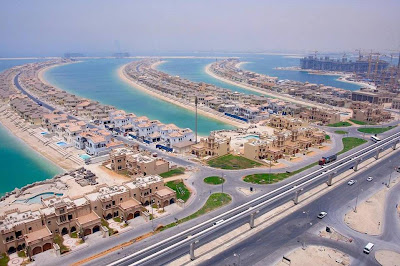
New photos Palm Jumeirah at DUBAI

Palm Jumeirah @ DUBAI new pics

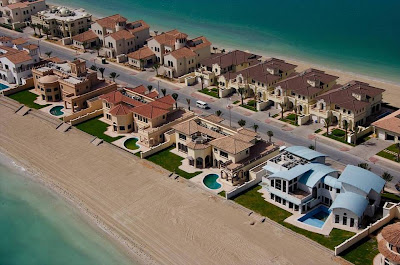
Palm Jumeirah @ DUBAI new pics
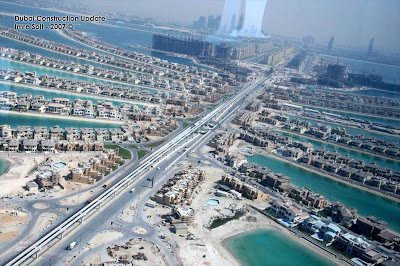
Palm Jumeirah @ DUBAI new picsNow see this stuff………………….
This is taken from world's tallest building "Burj Dubai" @ 2,620 ft / 801m!!!

What do you think guys…………………

Palm Jumeirah @ DUBAI new pics

8 Most Expensive Perfumes

Globally, the flavors and fragrances form a $17.8-billion industry of which the top five players are Givaudan, International Flavors & Fragrances, Firmenich, Symrise and Quest International.

These five companies have a substantial presence in the Indian market, along with competition from Indian F&F houses like SH Kelkar, Sachee Aromatics and Oriental Flavors & Fragrances. The Indian F&F market is estimated at around $225 million.

"The word 'perfume' comes from the Latin per fume 'through smoke'. One of the oldest uses of perfumes was in the form the burning of incense and aromatic herbs used in religious services, often the aromatic gums, frankincense and myrrh, gathered from trees.

The Egyptians were the first clan to use perfume followed by the ancient Chinese, Hindus, Israelites, Carthaginians, Arabs, Greeks, and Romans.

The Egyptians invented glass and perfume bottles were one of the first common uses for glass.

So which is the most expensive perfume brand available in the market? Which perfume bottle is adorned with a five-carat diamond? Read on to find out. . . (These perfumes have been ranked by www.perfumejuice.com.
Clive Christian's Imperial Majesty
1. Clive Christian's Imperial Majesty: Price $215,000
British designer Clive Christian's creation has recently been voted in the Guiness Book of World Records the most expensive perfume in the world. The 16.9-ounce perfume bottle is stuck into the 18-carat gold collar that is adorned with a five-carat diamond. Only five bottles are made annually, justifying the eye-popping price.

2. Clive Christian No. 1: Price $2,150 (2 oz.)Clive Christian No. 1
This perfume is an extravagant combination of Indian jasmine, mandarin and sandalwood. Its bottle is handmade from lead crystal, while the neck is 24-karat gold-plated sterling silver, set with a solitaire.

The stopper is designed after the original pattern granted by Queen Victoria.

3. Caron's Poivre: $2,000
The peppery unisex fragrance of Caron Poivre is a snip at $2,000 (for 2 oz).Caron's Poivre

This perfume is a concoction of lavender, jasmine, rose, Lily of the valley, carnation, cedar, sandalwood, Tonka and musk.

The maker of this perfume, Caron, is one of the last perfume houses to still have an in-house 'nose' (Monsieur Fraysse) -- also called a master perfumer.

4. Chanel No 5: Price $1,850Chanel No 5
One of the world's most famous perfumes relies heavily on jasmine. It was the first fragrance from Parisian couturier, Gabrielle 'Coco' Chanel.

History has it that Chanel commissioned renowned perfumer Ernest Beaux to make six perfumes. They were labelled No. 1, No. 2, etc. through No. 6. Chanel liked No. 5 the most and that became the chosen formula.

Initially, this perfume was given to some of Chanel's clients for free at her boutique.
Baccarats Les Larmes Sacrees de Thebe
5. Baccarats Les Larmes Sacrees de Thebe: Price $1,700
Baccarat, better known as the maker of high-quality crystal, entered the fragrance business in the late 1990s with three limited-edition fragrances of its own.

Baccarats Les Larmes Sacrees de Thebe combines frankincense and myrrh. The perfume comes in exquisite Baccarat crystal bottles.Annick Goutal's Eau d'Hadrien

6. Annick Goutal's Eau d'Hadrien: Price $1,500
Annick Goutal is a European perfumer, former model and prize-winning pianist. Her Eau d'Hadrien is a fresh, citrus blend of Sicilian lemons, grapefruit and cypress.

7. Hermes' 24 Faubourg: Price $1,500Hermes' 24 Faubourg
This woman's perfume, which comes in 1-oz bottles, is made by French fashion house Hermes International.

Hermes started its fragrance line in 1951. Over the past 57 years, the company has created several fragrances for both men and women.

8. Jean Patou's Joy: Price $800Jean Patou's Joy
This is quite a popular fragrance among Hollywood stars. It comes in 1-oz bottles and is a heavy floral scent, based on the most precious rose and jasmine, created by French fashion designer Jean Patou.

Other Patou perfumes are Amour Amour, Adieu Sagesse and Que Sais Je.
But 'Joy' is the most well known one.

White And Golden hair tiger looks awesome

White Tigers

Beautiful Golden hair tiger and White Tigers are amongst the most ferocious animals that inhabit planet earth. They are dreaded by human beings as well as other animals of the jungle. Essentially, tigers belong to the cat family and are the wild species of the smaller domesticated pets people keep at home. There are varied species of tigers that are found in various places of the world, amongst them is the most endangered species: The white tigers.

The white tigers are also known as the Bengal Tigers, as well as the Indian tiger. The scientific name for this animal is Panthers Tigris, and are found in Asia, more specifically in the India subcontinent. In its natural habitat the white tiger is found in the dense forest and fertile grasslands. This species of the tiger normally reaches its full adult size at the age of two to three years. The male generally 200 to 230 kilograms and grows up to three meters in length. On the other hand the females weigh between 130 to 170 kilograms. They grow up to the length of to 2.5 meters.

The tigers of this species have stripes that look like fingerprints all over their body. Another distinguishing characteristic feature of the Bengal tigers is that they have a distinct white spot, which is on the back of their ears. This look likes an eye. They can run up to a maximum speed of 60 kilometers per hour. However, in spite of this they do not possess optimum stamina and need to sleep for an average of 16 to 18 hours, per day.

The Bengal tigers are very patient when trying to catch their prey, patiently waiting to make the perfect move. They generally hide in the tall grass areas so that they can catch their prey unawares, without having to make much of an effort. This tiger species can swim swiftly in water. Another unique characteristic of this species is that it can shed, as well as grow its body hair according to the temperature.

Golden hair tiger

Amazing Facts On Butterflies

These are some of the Amazing facts on butterflies that we have gathered for you.

* The original name for butterfly was flutterby.
* A housefly, regurgitates food after eating and eating again.
* A dragon fly lives for 24 hours.
* Butterflies can have a size of 1/8 inch to a huge almost 12 inches.
* Butterflies can see red, green, and yellow.
* Night butterflies have ears on their wings.
* The top butterfly flight speed is 12 miles per hour.
* Butterflies cannot fly if their body temperature is less than 86 degrees.
* There are about 24,000 species of butterflies.
* The Brimstone butterfly has the longest lifetime of the adult butterflies: 9-10 months.
* The females of some moth species don’t have wings.
* Some moths don’t have mouths.
* Many butterflies can taste with their feet.
* Many insects can carry 50 times their own body weight.
* There are over a million described species of insects.
* Most insects are beneficial to human in the form of honey, silk and other medicinal uses.
* Butterflies have their skeletons on the outside of their bodies, called the exoskeleton

Strange Historical Facts

Facts: In 200 BC, when the Greek city of Sparta was at the height of its power there were 20 slaves for every citizen.


The first-known contraceptive was crocodile dung and was used by the Egyptians in 2000 BC.


The Hundred Year War actually lasted for 116 years – from 1337 to 1453.


The shortest war there has ever been was between Britain and Zanzibar during 1896. It lasted for a pathetic 38 minutes.


Everyone in the Middle Ages believed -- as Aristotle had -- that the heart was the seat of intelligence.


Fourteenth century physicians didn't know what caused the plague, but they knew it was contagious. As a result they wore an early kind of bioprotective suit which included a large beaked head piece. The beak of the head piece, which made them look like large birds, was filled with vinegar, sweet oils and other strong smelling compounds to counteract the stench of the dead and dying plague victims.


In England and the American colonies they year 1752 only had 354 days. In that year, the type of calendar was changed, and 11 days were lost.


The condom was invented in the early 1500's, and was originally made of linen.


In the Great Fire of London in 1666 half of London was burnt down but only 6 people were injured.


It has been calculated that in the last 3,500 years, there have only been 230 years of peace throughout the civilized world.


At the height of inflation in Germany in the early 1920s, one U.S. dollar was equal to 4 quintillion German marks.


In 1778, fashionable women of Paris never went out in blustery weather without a lightning rod attached to their hats.


During the time of Peter the Great, any Russian man who wore a beard was required to pay a special tax.


In 1892, Italy raised the minimum age for marriage for girls to 12.


Ancient Egyptians shaved off their eyebrows to mourn the death of their cats.


In ancient Rome, a runaway slave was considered a criminal because he had stolen himself (i.e. the property of his master)!


Roman women especially enjoyed when their husbands went to war against Germany because the naturally-blond hair of Germans captured in battle would be used to make wigs!


According to Juvenal, the streets of Rome were so noisy that people living near them would die from lack of sleep! (Hyperbolic ally speaking, of course)


The punishment of a Vestal Virgin who broke her oath of chastity was to be buried alive!


In early Rome, a father could legally execute any member of his household!


In May 1948, Mt Ruapehu and Mt Ngauruhoe, both in New Zea land, erupted simultaneously.

Ordinary MILF wedding

Is she Sharon Stone? Well, she doesn't need to be. You're 24, she's 48, and you want to marry her? Here is an "ordinary" MILF wedding: it looks like they're madly in love. Enjoy.

wed1

wed3

wed2

web4

Extraordinary Examples of Camouflage Animal

Just like plants, animals have evolved stunning characteristics and brilliant mechanisms for defending themselves passively. Whether it’s the ability to change color or actually resemble other objects, the wondrous ways in which animals camouflage themselves from predators is fascinating. If you enjoyed learning about the bizarre self-defense mechanisms of animals, read on to see some of the striking camouflage that animals use.

Examples of Camouflage Animal


Examples of Camouflage Animal
Dead Leaf Butterfly

The leaf butterflies look brilliant when their wings lay flat - they come in all manner of colors and shapes. But when their wings fold up they look like leaves - sometimes green, sometimes brown, as if fallen and dead. The likeness to a dead leaf is nothing short of remarkable. They live in forested, lush areas like New Guinea, southern Asia, Madagascar and India.


Examples of Camouflage Animal
Mimic Octopus
The Indonesian Mimic Octopus has a unique ability to turn virtually any color or pattern. It is naturally brown and spotted but has been seen in every hue from ghost white, as shown above, to brilliant blue and fiery red or mysterious pink. Though many octopi are known to change color and skin texture, only the Mimic Octopus can take on the shape and features of other animals and surroundings.


Examples of Camouflage Animal
Cuttlefish

The unusual cuttlefish can change colors and textures to defend itself passively.


Examples of Camouflage Animal
Malaysian Orchid Mantis

The luxurious and seemingly fragile orchid is one of nature’s most revered blooms. In reality, it’s a rather hardy bromeliad, and there are thousands of different varieties. This Malaysian Orchid Mantis has cleverly adapted to resemble the striking white orchids of the region.


Examples of Camouflage Animal

Leafy Sea Dragon

Sea creatures are particularly fond of blending in. From nudibranchs to the octopus, from cuttlefish to many other brilliant fish, marine life has learned to hide. Future posts in this series will take you on an underwater journey to see these incredible animals, and here is another peek. The leafy sea dragon looks like a bunch of undulating undersea fronds or a stray kelp thicket.

Examples of Camouflage Animal


Lion

From insects to reptiles, amphibians to mammals, many animals are camouflaged - giraffes, zebras, lions, tigers, coyotes and the majority of female birds typically display coloring that suits their environs and helps them hide. The lioness here was briefly captured on film before disappearing into the savannah.

Examples of Camouflage Animal

Fox

Animals may adapt coloring to suit their environments; or they may be able to change color at a moment’s notice. For many furred animals such as wild foxes, leopards and wolves, seasonal color changes help them protect themselves.

Most Bizarre Sights on Google Earth

Satellite imagery used to be the exclusive domain of governments and spy agencies, but ever since Google Maps and Google Earth we can all get to see weird things! Fancy a look at Area 51? Wondered what it’s like in downtown Moscow? Or maybe you want to check out the Principality of Sealand? These are just ordinary, everyday things that millions of people use Google Maps and Earth to research every day. But what about the things you weren’t supposed to see, the freaks of camera?

Most Bizarre Sights on Google Earth

Single-winged Aircraft Landing


This single-winged miracle-aircraft is the result of a bizarre mapping error that Google Earth occasionally suffers from. If you are a frequent Google Earth user you’ll probably have noticed incidences where roads and bridges don’t align properly or varying image resolutions cause some strange viewing. This aircraft was snapped on approach to the north western runway of Amsterdam Schiphol Airport but appears to only have one wing!

Most Bizarre Sights on Google Earth

World War 2 Bomber in Flight


Google Earth has the ability to snap airplanes in midair - apparently some 3,300 planes have been placemarked. This is a World War II bomber flying over the sleepy suburbs of Huntingdon, England. Unfortunately, the bomber is no longer there in the updated image of the area.

Most Bizarre Sights on Google Earth

Capsised Cruise Liner


If you’ve ever wondered what happens when a powerful typhoon slams into a cruise liner, then here’s your answer. This liner-shaped hotel was docked in the South Korean port of Busan when it was hammered by the 135mph winds of Typhoon Maemi in 2003.

Most Bizarre Sights on Google Earth
North Dakota Truck Crash


Sometimes Google’s snapshots of our world are lucky enough to catch things as they happen. Here Google Earth captures a truck that crashed and sprawled out over East Burleigh Avenue just outside of Bismarck, North Dakota.


Most Bizarre Sights on Google Earth

Ghost Ships


No longer confined to the annals of countless storybooks and Hollywood movies, ghost ships are real and they’re here today thanks to the camera-freakology of Google Earth! Here we can quite clearly see a ghost ship docking in Newark, New Jersey and taking on a load of cargo. Perhaps this is some sort of reincarnated Black Pearl? I dunno …

Most Bizarre Sights on Google Earth
Gravity Defying Car Parking


Do you think getting somewhere to park your car is tough where you live? In Defenestrating, Netherlands, drivers apparently have to park on the sides of walls. Of course, this is just an example of tongue-in-cheek Dutch humour that comes through well from the above view.


Most Bizarre Sights on Google Earth

Giant Indian Head w/ i pod


Turns out that the original inhabitants of north America were much cooler than previously thought. “Loud White Ears” had set such a trend back in the ancient times that they decided to build a large effigy of him in commemoration.

Most Bizarre Sights on Google Earth

Super Shrunk Aral Sea


The once thriving Aral Sea used to be the 4th largest inland lake in the world but has shrunk to a mere 15% of its original size over the last 20 years. The water-guzzling cotton industry has mainly been responsible for this super-shrinking. As a knock on result, the once busy local fishermen have had to pack up and leave, abandoning their boats which are now 50km from the receding shoreline. A sad scene to look upon indeed


Most Bizarre Sights on Google Earth
The Leaning Tower of Seattle


This building in Seattle, Washington appears to be leaning badly across the building across the street, nearly touching the opposite building. Despite the appearance, it’s not really the case. There are a few quirks with Google Earth and this one is due to two different satellite angles for this area and merging of the two views. Seattle - you’ve missed out on a proper tourist attraction! You’re just going to have to make do with Microsoft and Star bucks

NB: Over time these flukes will probably be removed as Google updates their data and creates even more bizarre sights.

Earth's 10 Most Impressive Impact Craters

Vredefort Crater.  Image: NASA

Vredefort Crater. Image: NASA


Ever since our recent encounter with asteroid 2008 TC3 — the first asteroid that was correctly predicted to hit our planet — I've had impact craters on the brain. Earth has about 175 known impact craters, but surely our planet has endured more bashing than that in its history. All the other terrestrial planets and moons in our solar system are covered by impact craters. Just look at our Moon through a telescope or binoculars, or check out the recent images of Mercury sent back by the MESSENGER spacecraft, or pictures of Mars from the armada of spacecraft orbiting the Red Planet, and you'll see that impact craters are the most common landforms in our solar system. But since two-thirds of Earth is covered by water, any asteroid impacts occurring in the oceans are difficult to find. And even though Earth's atmosphere protects us from smaller asteroids, just like in the case of 2008 TC3, which broke up high in the atmosphere, weathering, erosion and the tectonic cycling of Earth's crust have erased much of the evidence of Earth's early bombardment by asteroids and comets. Most of Earth's impact craters have been discovered since the dawn of the space age, from satellite imaging. In fact, a geologist recently discovered an impact crater using Google Earth! Here's my list of Earth's Ten Most Impressive Impact Craters, starting with #1. the largest and oldest known impact crater, Vredefort Crater, shown above, located in South Africa. It is approximately 250 kilometers in diameter and is thought to to be about two billion years old. The Vredefort Dome can be seen in this satellite image as a roughly circular pattern. What an impact that must have been!

Manicouagan Reservoir.  Credit: NASA

Manicouagan Reservoir. Credit: NASA


2. Manicouagan Crater: fifth largest known impact crater. This crater is located in Quebec, Canada. It was created about 212 million years ago. Now, it is an ice-covered lake about 70 km across. This image, taken by space shuttle astronauts, shows an outer ring of rock. Close up, the rock reveals clear signs of having been melted and altered by a violent collision. The original rim of the crater, though now eroded away, is thought to have had a diameter of about 100 km.

Chicxulub Crater.

Chicxulub Crater.


3. Chicxulub Crater, third largest and possible dinosaur killer. The third largest impact crater lies mostly underwater and buried underneath the Yucatán Peninsula in Mexico. At 170km (105 miles) in diameter, the impact is believed to have occurred roughly 65 million years ago when a comet or asteroid the size of a small city crashed, unleashing the equivalent to 100 teratons of TNT. Likely, it caused destructive tsunamis, earthquakes and volcanic eruptions around the world, and is widely believed to have led to the extinction of dinosaurs, because the impact probably created a global firestorm and/or a widespread greenhouse effect that caused long-term environmental changes.

Aorounga Crater.  Credit: NASA

Aorounga Crater. Credit: NASA


4. Aorounga Crater: possible triple crater. The main Aorounga Crater in Chad, Africa, visible in this radar image from space, shows a concentric ring structure that is about 17 kilometers wide. But, this crater might have been formed as the result of a multiple impact event. A second crater, similar in size to the main crater, appears as a circular trough in the center of the image. And a third structure, also about the same size, is seen as a dark, partial circular trough on the right side of the image. The proposed crater "chain" could have formed when a 1 km to 2 km (0.5 mile to 1 mile) diameter object broke apart before impact. Ouch!
Clearwater craters. Credit: NASA

Clearwater craters. Credit: NASA


5. Clearwater Craters: two for the price of one. Twin, lake-filled impact craters in Quebec, Canada were probably formed simultaneously, about 290 million years ago, by two separate but probably related meteorite impacts. The larger crater, Clearwater Lake West has a diameter of 32 km, and Clearwater Lake East is 22 km wide.

Barringer Crater.

Barringer Crater.


6. Barringer Crater: well preserved. While this crater isn't all that big, what's most impressive about Barringer Crater in Arizona (USA) is how well preserved it is. Measuring 1.2 km across and 175 m deep, Barringer Crater was formed about 50,000 years ago by the impact of an iron meteorite, probably about 50 m across and weighing several hundred thousand tons. Most of the meteorite was vaporized or melted, leaving only numerous, mostly small fragments with in the crater and scattered up to 7 km from the impact site. Only about 30 tons, including a 693-kg sample, are known to have been recovered.
Wolfe Creek Crater

Wolfe Creek Crater


7. Wolfe Creek Crater, well preserved, too. Another relatively well-preserved meteorite crater is found in the desert plains of north-central Australia. Wolfe Creek crater is thought to be about 300,000 years old and is 880 meters across and and about 60 meters deep. It's partially buried under the wind-blown sand of the region, and although the unusual landform was well-known to the locals, scientists didn't find the crater until 1947.
Deep Bay Crater.  Credit: NASA

Deep Bay Crater. Credit: NASA


8. Deep Bay Crater: deep and cold. Deep Bay crater is located in Saskatchewan, Canada. The bay is a strikingly circular 13 km wide impact crater and is also very deep (220 m). It is part of an otherwise irregular and shallow lake. The age of the crater is estimated to be 99 million years old.

Kara-Kul Crater.  Credit: NASA

Kara-Kul Crater. Credit: NASA


9. Kara-Kul Crater: high altitude crater. This crater was formed about 10 million years ago, and is located in Tajikistan, near the Afghan border. In total, the crater is about 45 km in diameter and is partially filled with a 25 km-wide lake. This might be the "highest" impact crater, almost 6,000 m above sea-level in the Pamir Mountain Range. It was found only recently from satellite images.

Bosumtwi Crater.

Bosumtwi Crater.


10. Bosumtwi Crater: built of bedrock. The last crater on our tour of impressive impact craters is this located in Ghana, Africa. It is about 10.5 km in diameter and about 1.3 million years old. The crater is filled almost entirely by water, creating Lake Bosumtwi. The lakebed is made of crystalline bedrocks.